Meta Description:

How do importers, distributors, and project buyers choose the right SPC flooring? This guide covers specifications, wear layer, application fit, repeat-order consistency, quality control, and supplier evaluation to help buyers reduce sourcing risk and make better decisions.
Many articles about SPC flooring stop at the basics: what it is, why it is waterproof, and why it is durable. For general readers, that may be enough. For serious buyers, it is not.
In real B2B sourcing, buyers are rarely just trying to understand what SPC flooring is. What they really want to know is:
● Which specification is right for my market?
● How should I choose between 4mm, 5mm, and 6mm SPC flooring?
● What does a 0.3mm vs 0.5mm wear layer mean for my channel or project?
● Is this product better for distribution stock programs or project supply?
● Can this supplier support repeat-order consistency, lead time, and documentation?
Those are the questions that actually determine whether a sourcing decision succeeds.
From a manufacturing and export supply perspective, SPC flooring is not just a product name. It is a system decision involving specification selection, application fit, risk control, and supply stability. If those points are not clarified early, even a quotation that looks competitive at first can become expensive later through complaints, rework, reorder inconsistency, or poor project fit.
This article does not just explain SPC flooring. It is designed to help importers, distributors, and project buyers evaluate what kind of SPC flooring is actually suitable for their business.
What Is SPC Flooring: Understanding It as a Sourcing Decision, Not Just a Product Definition
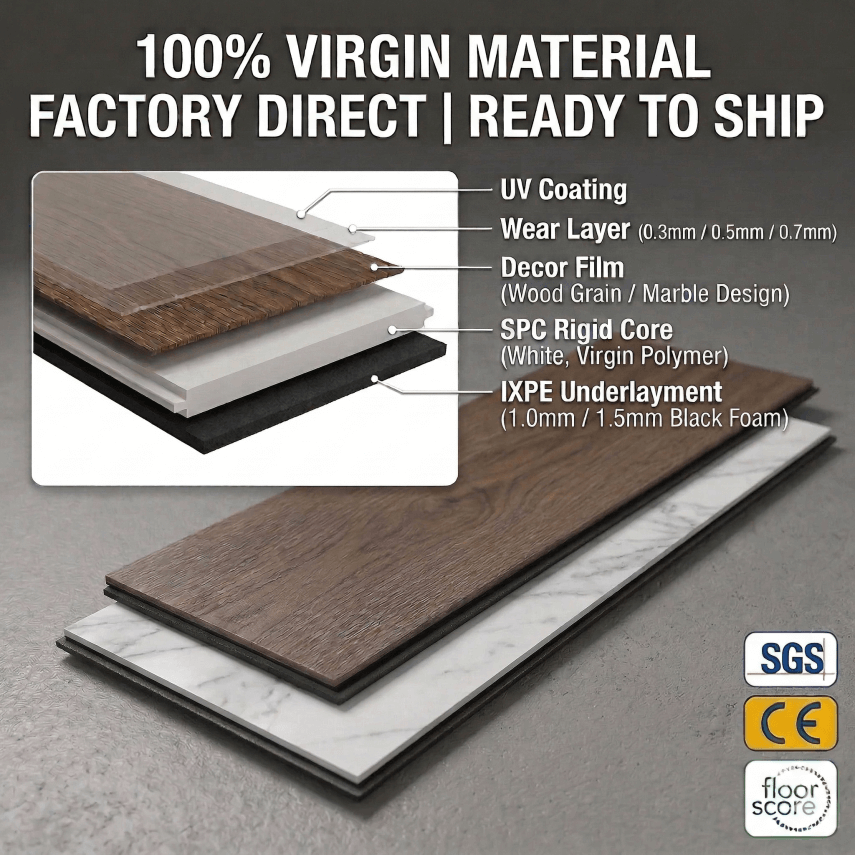
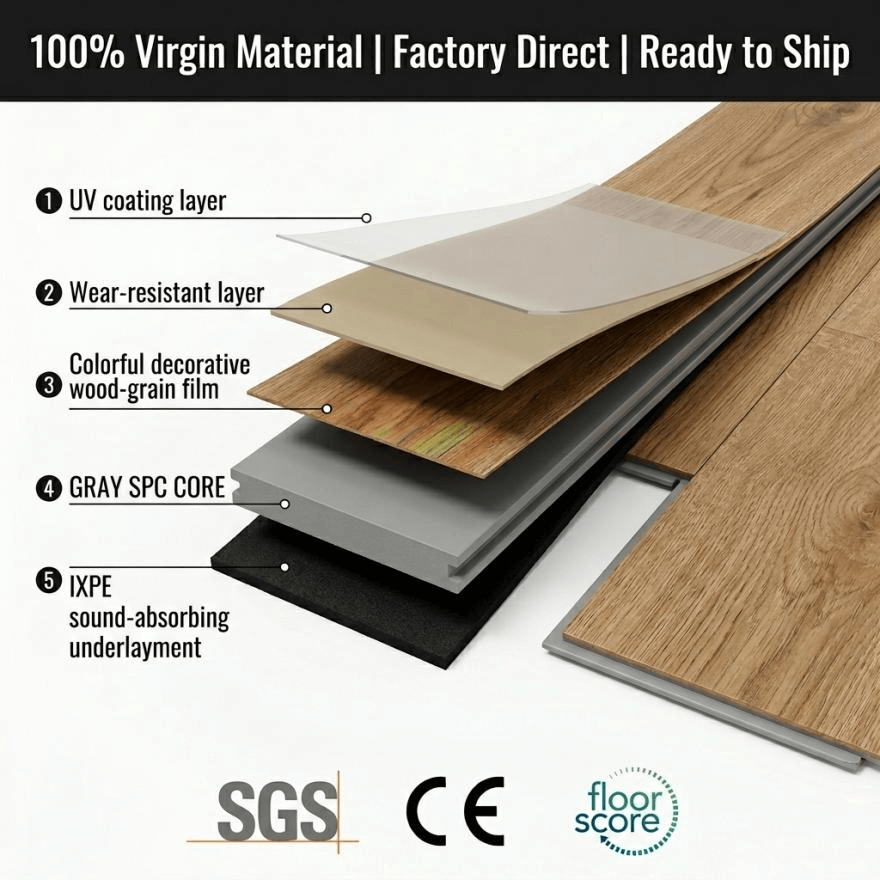
SPC flooring stands for Stone Plastic Composite flooring and is commonly classified as a type of rigid core vinyl flooring. Its typical structure includes:
● UV coating
● Wear layer
● Décor film
● SPC rigid core
● Optional underlayment such as IXPE or EVA
From a product definition standpoint, that is straightforward. From a sourcing standpoint, it is not. Even if two suppliers both say they offer “SPC flooring,” there can still be major differences in:
● Core density
● Locking precision
● Wear-layer consistency
● Surface embossing and visual quality
● Backing configuration
● Repeat-order color consistency
That is why many buyers think products look similar during the sample stage, only to realize the differences later during order execution, installation, reordering, or customer feedback.
For a retail consumer, one flooring product may simply be a home improvement choice. For an importer or project buyer, one SPC flooring line may represent:
● Whether the product can sell well in the market
● Whether complaint rates stay under control
● Whether project delivery remains stable
● Whether replenishment stays consistent
● Whether the supplier is suitable for long-term cooperation
That is why mature sourcing decisions do not stop at asking whether a product is SPC flooring. They go further and ask: What is this SPC flooring actually suitable for in terms of market, customer type, and application?
Why Importers and Project Buyers Continue Choosing SPC Flooring
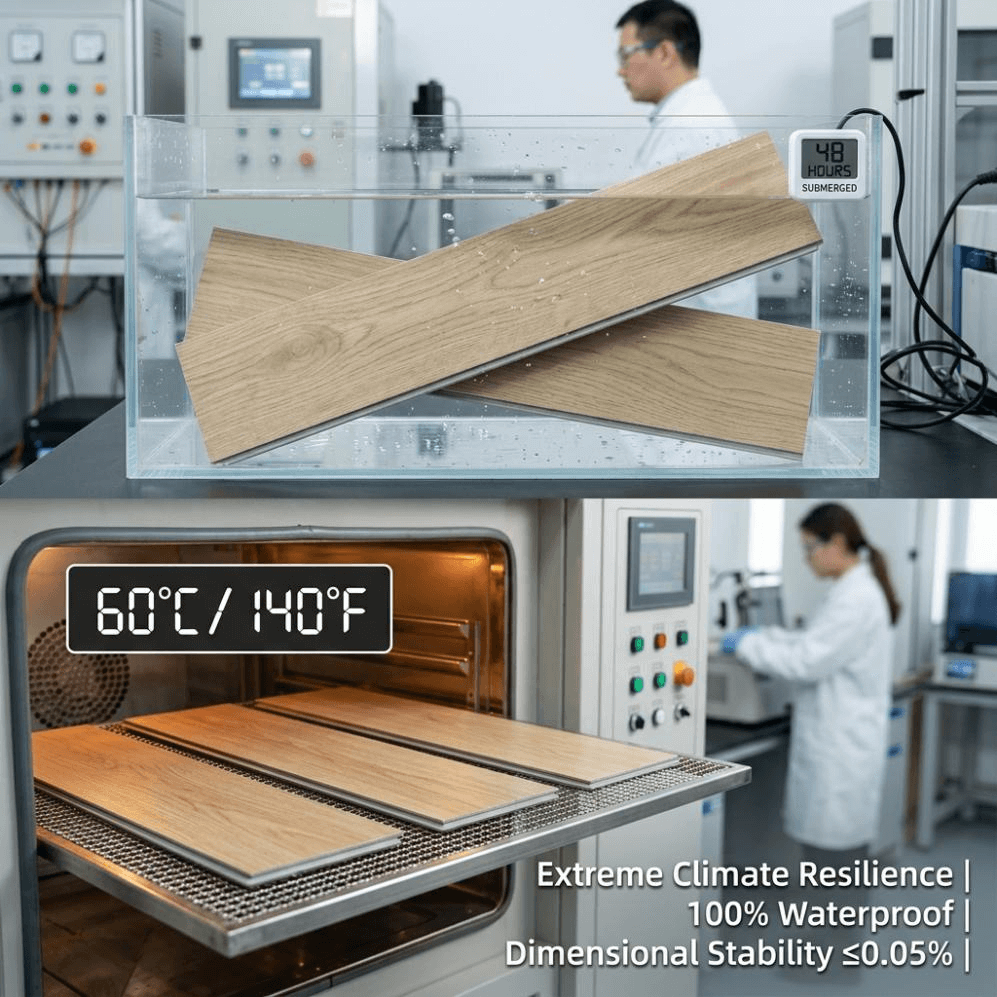
SPC flooring continues to grow in international markets not because it is simply “new,” but because it solves practical channel and project needs.
First, it has a clear waterproof selling point. That makes it easier to position in kitchens, entryways, basements, apartment renovations, and rental upgrades. For distributors and importers, a product with a clear selling logic reduces market education cost. For project buyers, clear functional positioning often means lower dispute risk.
Second, SPC flooring offers a good balance between appearance and maintenance cost. Many buyers want wood-look visuals, a modern style, and relatively easy upkeep. SPC flooring sits in that intersection. It is easier to maintain than some natural materials and generally more visually appealing than many low-end alternatives.
Third, it offers specification flexibility, which makes product tiering easier. Importers and distributors can build different price bands and customer levels using different thicknesses, wear layers, surface finishes, backing options, and packaging formats.
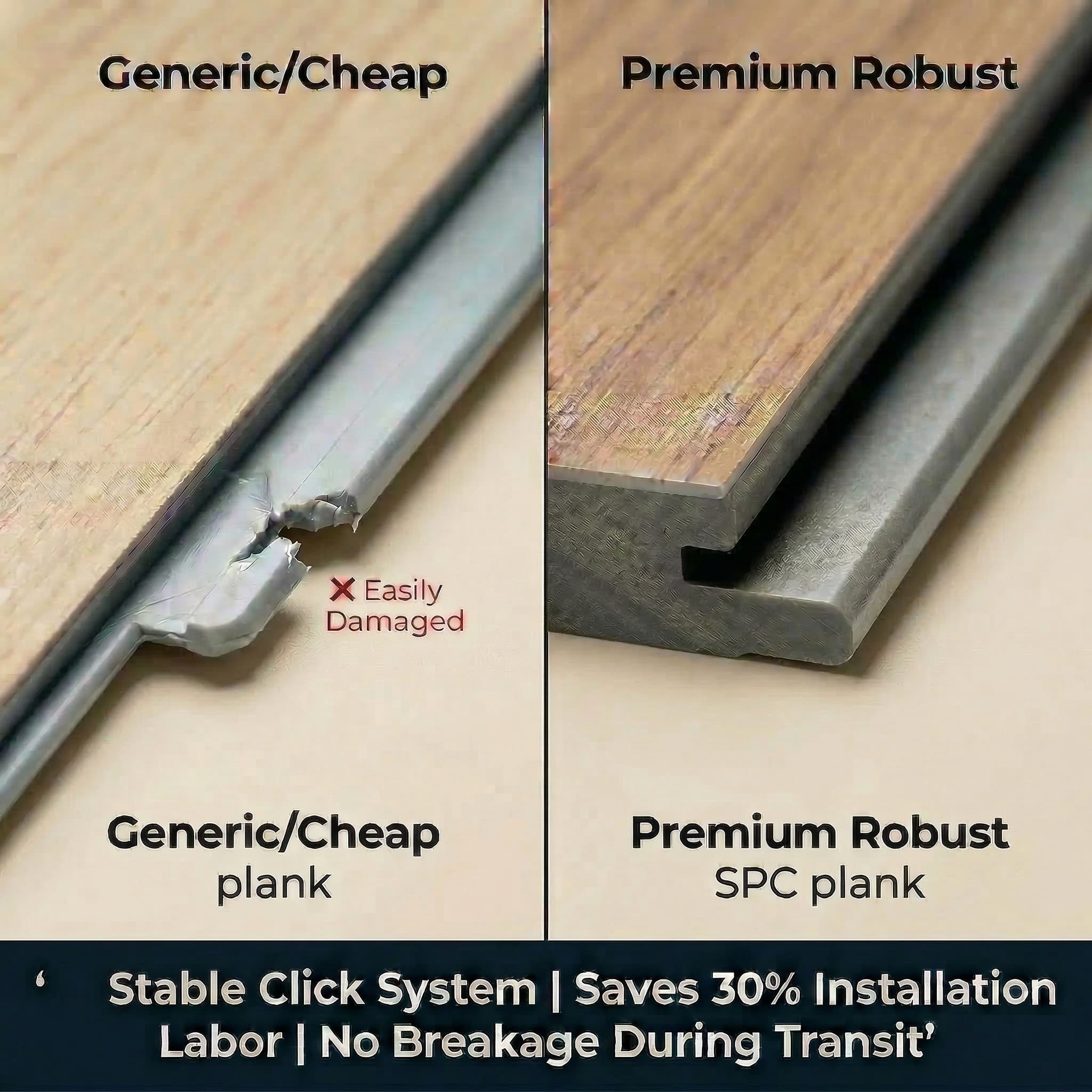
But this flexibility also makes sourcing decisions more important. A supplier may offer a low quotation, but if that price is achieved by reducing locking performance, core stability, or wear-layer quality, that low price may not be a real advantage. It may simply be delayed risk.
Case 1: Why One 4mm SPC Program Worked Well While Another Created Problems
Here is a very typical situation. A small European importer targeted mid-to-lower-end building material distributors. Their key priorities were:
● Competitive pricing
● Easy-selling colors
● Private label packaging
● Stable replenishment
In that case, 4mm SPC flooring was absolutely a workable option. If the product is clearly positioned for a price-sensitive residential renovation market, the key is not to chase thickness blindly. The key is to make sure:
● The locking system is stable
● The standard wear layer fits residential use
● The décor selection matches market demand
● Cartons and labels are suitable for channel presentation
● Color and surface variation remain under control in repeat orders
In that kind of program, 4mm SPC flooring can sell very well.
But another buyer took a similar specification and used it for hotel-style apartment projects simply because the quotation looked cheaper. Soon after installation, the project side began to report:
● Faster visible wear in high-traffic zones
● Weaker locking performance in some areas
● Lower satisfaction with perceived product quality
● Greater sensitivity to color batch differences during replenishment
The issue was not that 4mm SPC flooring is always bad. The issue was specification mismatch with application.
Key Takeaway: In sourcing, the most dangerous mistake is not necessarily buying too high. It is buying the wrong product.
How to Choose the Right SPC Flooring Thickness and Wear Layer
Thickness and wear layer are two of the most frequently discussed SPC flooring parameters, but they are also two of the most misunderstood.
When 4mm SPC Flooring May Be More Suitable
It is often more suitable for:
● Price-sensitive residential channels
● Standard distribution stock programs
● Entry-level market positioning
● Projects with relatively good subfloor conditions
When 5mm / 5.5mm SPC Flooring May Be More Suitable
It is often more suitable for:
● Importers building a mid-range upgraded product line
● Channels that care more about product feel and solidity
● Projects that need slightly better subfloor tolerance
● Apartments, residential renovation, and selected light commercial interiors
When 6mm SPC Flooring and Above May Be More Suitable
It is often more suitable for:
● Product lines that emphasize stronger structure and perceived value
● Projects with higher expectations for use experience and stability
● Distribution programs that care more about long-term image and product positioning
But thickness is not everything. Wear-layer judgment is just as important.
Many sourcing mistakes happen not because total thickness was wrong, but because wear layer was not selected based on actual traffic level and usage logic. If the product is mainly used for basic residential spaces, a standard residential configuration may be enough. But for high-traffic light commercial interiors, apartment public areas, offices, or hotel guest rooms, buyers should evaluate wear layer much more carefully.
So the more professional sourcing question should not simply be: "Do you have 4mm SPC flooring?"
It should be: "Is this project for residential distribution or light commercial use, and what thickness and wear layer would you recommend accordingly?"
Case 2: Project Buyers Should Not Buy the Thickest Product by Default
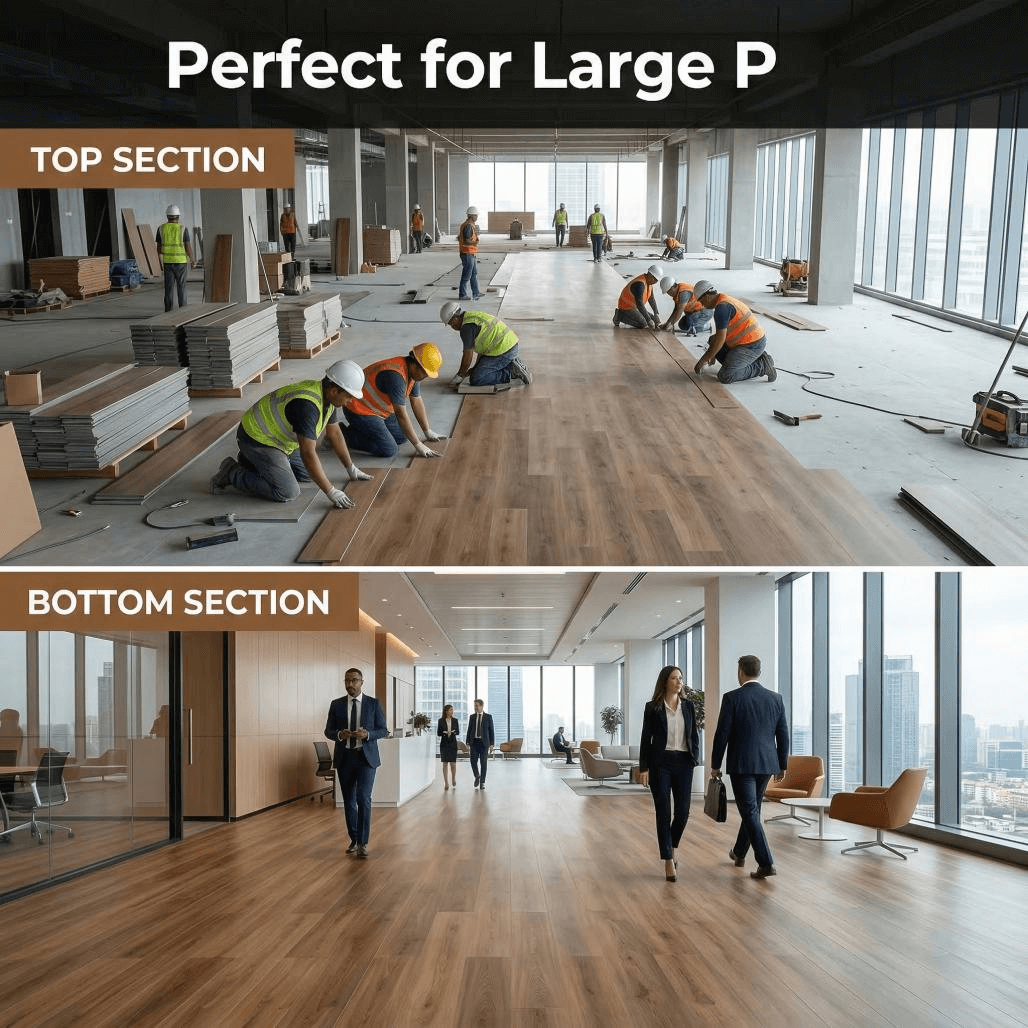
Some project buyers start their first inquiry by saying: "Give me the thickest and most wear-resistant option." That sounds safe, but it is not always the smartest sourcing logic.
I once saw an office renovation project where the buyer insisted on a higher-end specification at the beginning because they believed thicker automatically meant better. But after further discussion, the real project conditions became clear:
● The area was mainly standard office interior, not heavy commercial corridor traffic
● Visual consistency and maintenance convenience mattered more than extreme-duty performance
● The timeline was tight, so installation efficiency mattered
● Budget control was still important
In that case, the best solution was not to force the highest specification. It was to choose a mid-to-upper configuration that matched the actual use case. What the project really cared about later was:
● Smooth installation
● Visual consistency
● Easy daily maintenance
● Stable performance within budget
This case shows that project sourcing problems are often caused not by low numbers, but by disconnection between product specification and project logic.
How Different Buyer Types Should Evaluate SPC Flooring
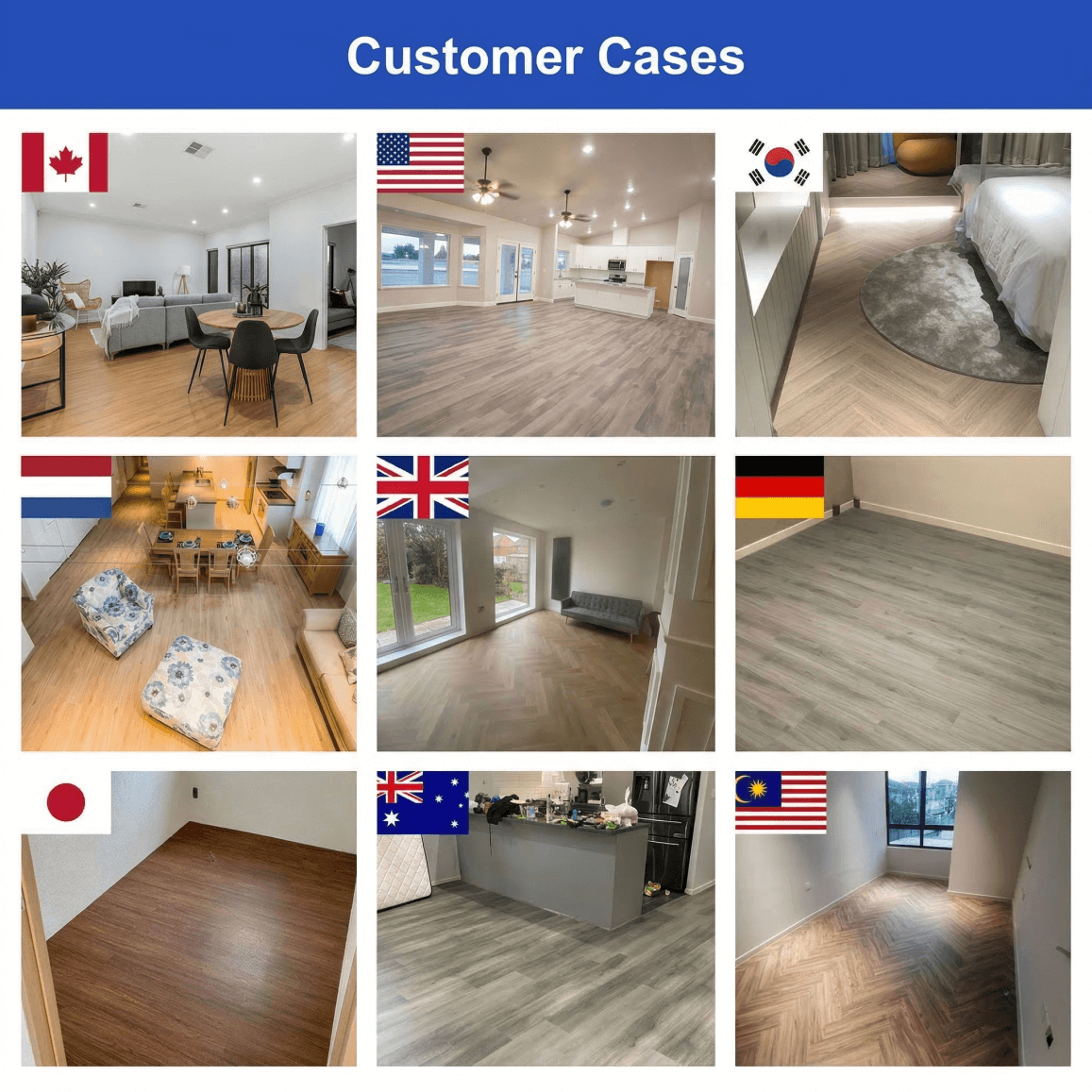
For Importers
Importers should focus on:
● Whether the specification fits the target market
● Whether private label packaging is available
● Whether sample-to-bulk consistency is reliable
● Whether follow-up replenishment is stable
● Whether the supplier understands local channel needs
What an importer really buys is not just a flooring product. It is a sellable, repeatable, and sustainable product program.
For Distributors
Distributors should pay more attention to:
● Which colors are easier to sell
● Which specifications fit inventory structure better
● Whether the channel accepts the price band
● Whether future replenishment is controllable
● Whether packaging and display materials support sales
For Project Buyers
Project buyers usually care more about:
● Specific application environment
● Traffic level
● Installation condition
● Delivery timing
● Documentation and quality support
● Post-installation risk
That is why a professional supplier should never respond to all buyers with the same generic recommendation. Distribution sourcing and project sourcing follow completely different decision logic.
Case 3: Repeat-Order Consistency Often Matters More Than the First Quotation
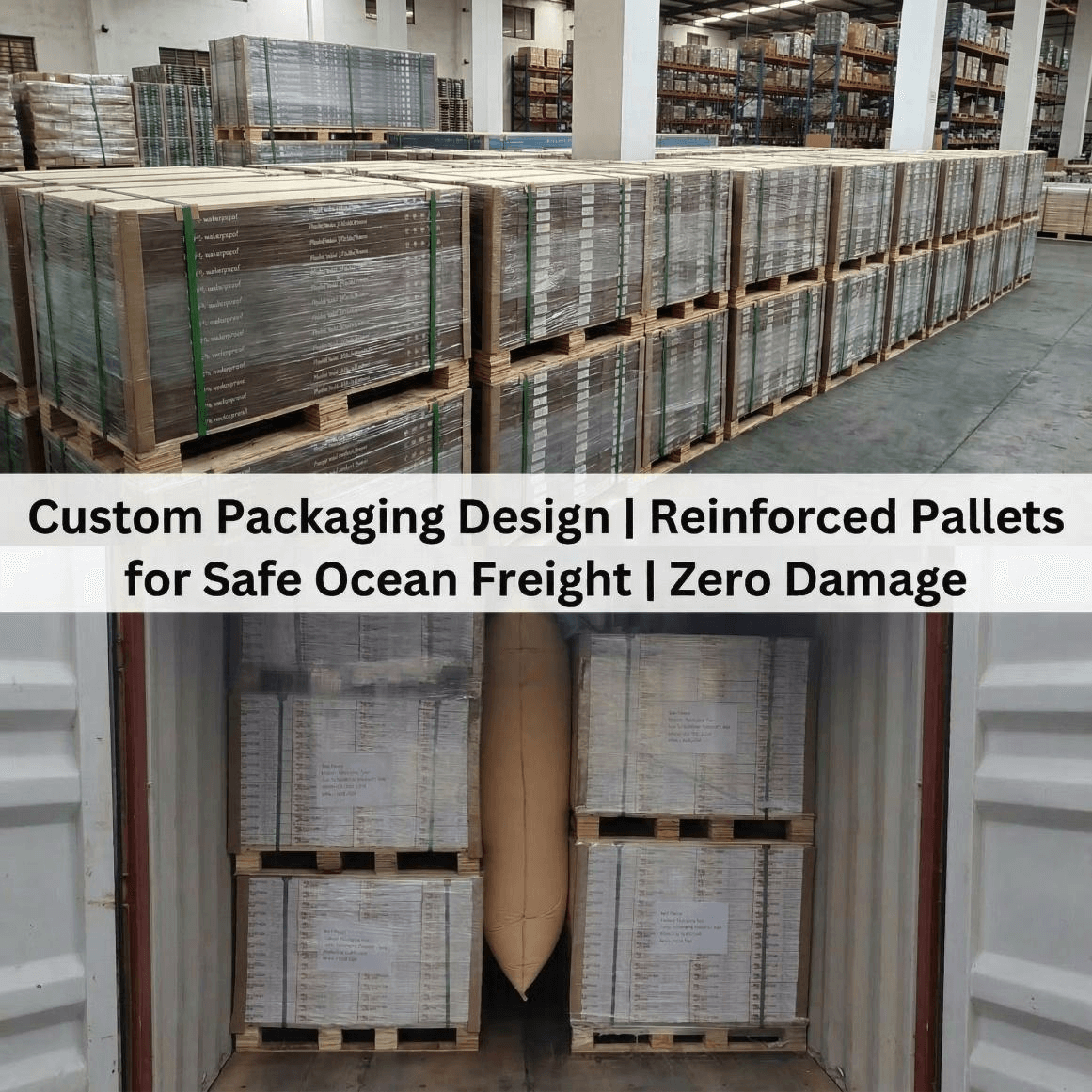
Many first-time import buyers focus most on price. That is understandable. But after one or two orders, what many of them start caring about most is repeat-order consistency.
I have seen this happen: A distribution buyer placed the first order. The price was attractive, the sample looked good, and the shipment went smoothly. But when the second replenishment order arrived, several problems appeared:
● Slight décor variation
● Different surface texture feel between batches
● Carton printing details that did not match the previous order
● Downstream retailers starting to question whether it was the same product
The situation may not have been serious enough for returns, but for a distributor, it was already a real problem. Their business depends on channel trust, not on one-time transactions.
That is why importers and distributors should ask more mature questions such as:
● How do you control batch-to-batch color variation?
● Can the same series remain stable over time?
● Can cartons, labels, and accessories stay consistent in replenishment?
● Do hot-selling items change frequently?
A low first quotation does not automatically mean low long-term cost. A truly strong supply program is not just one that can ship once. It is one that can ship well repeatedly.
10 Questions Importers Should Clarify Before Buying SPC Flooring
If I were sourcing SPC flooring, I would make sure these questions were clarified first:
1. Is this SPC flooring more suitable for residential distribution or light commercial use?
2. What application scenarios match the recommended thickness and wear layer?
3. Do you support private label packaging, logo underlayment, display boards, and marketing materials?
4. What is the MOQ and what does the sampling process look like?
5. How do you keep the sample and bulk order consistent?
6. How do you control color and surface consistency in repeat orders?
7. Can you support common certifications or documentation for North America, Canada, or Europe?
8. What is the standard lead time?
9. Can you support container loading suggestions and packaging optimization?
10. What does your quality-control process include before shipment?
These questions do not look complicated, but they directly affect whether sourcing runs smoothly. Many collaborations fail not because of price, but because execution details were never clarified early enough.
How to Evaluate an SPC Flooring Supplier Instead of Looking Only at Quotation
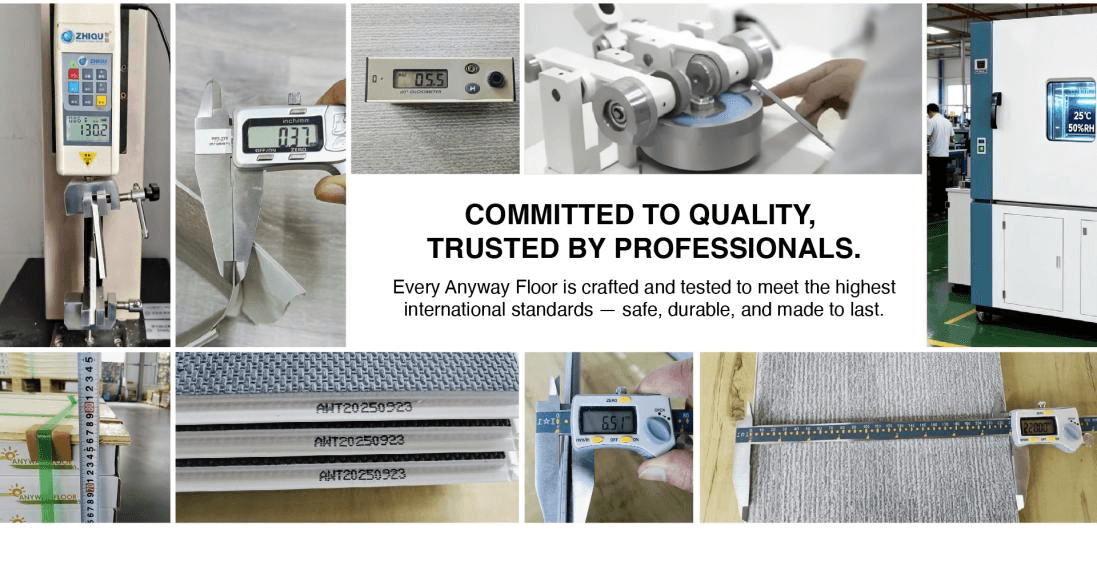
When choosing a supplier, many buyers initially focus too much on the price list. But mature sourcing does not begin with “How much?” It begins with whether the supplier can actually reduce risk.
A supplier worth long-term cooperation usually shows several characteristics:
First, they recommend products based on buyer type
They do not say every specification is fine. Instead, they ask:
● Which market are you targeting?
● What kind of buyers are you serving?
● Is this for distribution or project supply?
● Is price, feel, or stability more important to you?
Second, their specification materials are clear
They can explain thickness, wear layer, backing, surface finish, installation structure, and likely application fit instead of just sending a few pictures.
Third, they understand export and channel requirements
They know that importers care not only about the board itself, but also about:
● Packaging
● Documents
● Lead time
● Container loading
● Repeat-order consistency
● Communication efficiency
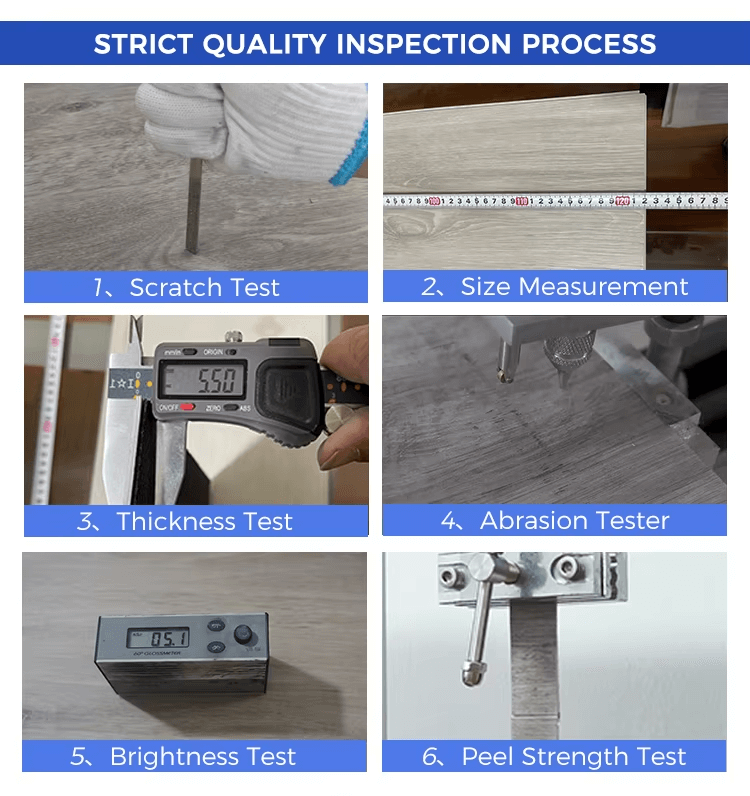
Fourth, they have clear quality-control logic
Instead of simply saying “our quality is very good,” they can clearly demonstrate:
● Raw material inspection
● Production control
● Locking and dimensional checks
● Surface and packaging inspection
● Pre-shipment confirmation process
Fifth, they communicate like a manufacturer, not a template-based seller
A manufacturer with real experience usually pays more attention to why you are buying, not only to how much you are buying.
Case 4: Why Some Suppliers Perform Well in the First Order but Begin Failing Later
This is not uncommon in foreign trade. The first cooperation often goes smoothly because:
● The order is concentrated
● Both sides are more cautious
● The specification is relatively simple
● Communication input is higher
But from the second order onward, if the supplier lacks stable production and quality systems, problems may start to appear:
● Misunderstanding of specifications
● Inconsistency between batches
● Packaging mistakes
● Unstable lead times
● Weaker communication efficiency
That is why a truly reliable supplier should not only perform well in the first order. They should remain stable in the second, third, and fourth orders as well.
Key Takeaway: B2B sourcing is not about buying one shipment. It is about evaluating a supply relationship.
Why Manufacturer Perspective Matters More Than Generic Product Content
Many general articles say:
● SPC flooring is waterproof
● SPC flooring is durable
● SPC flooring is easy to install
● SPC flooring works in many spaces
All of that is true, but it is not enough. For real buyers, the more important questions are:
● What does that feature mean in my market?
● Is this specification suitable for my channel?
● Can this factory produce it consistently?
● Do they have real export experience and project understanding?
● Can they stay consistent when reorders and delivery pressure appear?
That is why content on a manufacturer website should not read like a basic encyclopedia page. It should read like a page created by a supplier that truly understands sourcing, export, and buyer decision-making.
If You Are an Importer, Distributor, or Project Buyer, What Should You Do Next?
If you are currently considering SPC flooring, I would not suggest starting with the lowest quotation. I would suggest using this order of judgment instead.
Step 1: Define the sourcing scenario first
● Is it residential distribution or light commercial use?
● Is it a regular stock program or a one-time project?
● Is price the priority, or is stability the priority?
Step 2: Then define the product requirement
● What thickness level is needed?
● What wear-layer level is needed?
● Is attached underlayment required?
● Is private label packaging and display support needed?
Step 3: Then screen suppliers
● Can they recommend specification clearly?
● Can they explain application fit properly?
● Can they support documentation, sampling, lead time, and repeat orders?
● Do they make the relationship feel sustainable instead of one-off?
Conclusion: Good SPC Sourcing Is Not About Buying Cheap, but About Buying the Right Product Sustainably
SPC flooring is not just a waterproof flooring category. In import, distribution, and project sourcing, it is better understood as a product system that can support channel growth and project delivery.
But that only happens when the buyer chooses the right specification and the right supplier.
If I were making the decision, I would prioritize four things:
1. Whether the application fit is correct
2. Whether thickness and wear layer are reasonable
3. Whether repeat-order consistency is controllable
4. Whether the supplier is genuinely reliable
Many sourcing problems are not caused by the product itself being bad. They happen because the early-stage judgment was incomplete. Mature sourcing does not mean getting the lowest quotation. It means getting a solution that can sell, deliver, reorder, and reduce risk over time.

 English
 Русский
 العربية
 Français
 Español
 Português
 Deutsch
 italiano
 日本語
日本語 한국어
한국어 Nederlands
 Tiếng Việt
 ไทย
ไทย Polski
 Türkçe
 አማርኛ
አማርኛ Bahasa Melayu
 ဗမာစာ
ဗမာစာ Filipino
 Bahasa Indonesia
 magyar
 Română
 Čeština
 Српски
 हिन्दी
 فارسی
فارسی Kiswahili
 Slovenčina
 Slovenščina
 Norsk
Norsk Svenska
 українська
 Ελληνικά
 Suomi
Suomi Հայերեն
 עברית
עברית Dansk
Dansk اردو
اردو বাংলা
বাংলা Hrvatski
 Eesti keel
 नेपाली
 latviešu
 Euskara
 Български
 Català
 Hausa
Hausa íslenska
 Lietuvių
 Malti
Malti isiZulu